Colors
All the colors of the Birman cat
The Birman is a “colorpoint” cat: the body stays pale and the color is concentrated on the mask, ears, legs and tail. Whatever its coat, it always keeps its two signatures: sapphire-blue eyes and four white-gloved paws. The Birman comes in 40 recognized colors. Here are the main ones, illustrated by our own cats.
All 40 colors at a glance
Photos: our own cats, adults whenever possible. Swatches: colors not yet born in our cattery.| Seal | Blue | Chocolate | Lilac | Red | Cream | |
|---|---|---|---|---|---|---|
| Point | 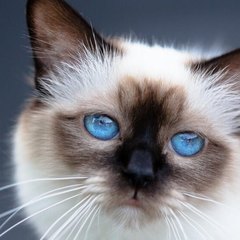 |  | 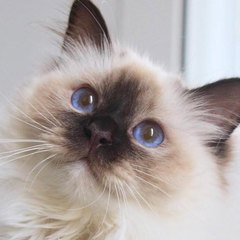 | 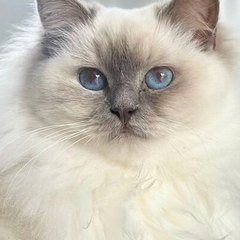 | ||
| Tabby point | 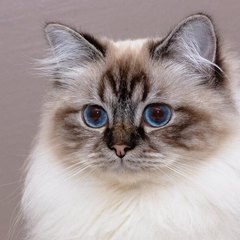 |  |  |  |  | |
| Tortie point | 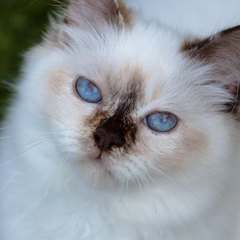 | – | – | |||
| Tortie tabby point |  | – | – | |||
| Silver tabby point |  |  | 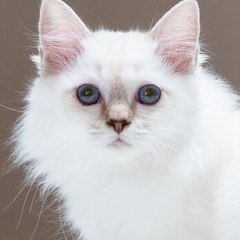 | |||
| Silver tortie tabby point | – | – | ||||
| Smoke point | ||||||
| Smoke tortie point | 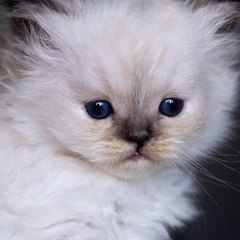 | 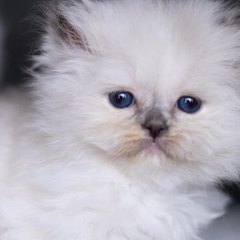 | – | – |
Solid colors
The points are a single color, with no stripes.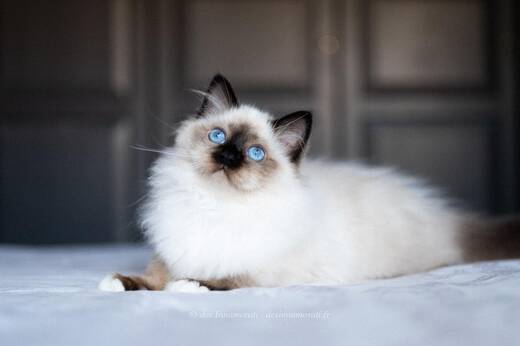
Seal point
Very dark brown points on a golden cream body. The Birman’s historic color.Photo: Tatooine des Innamorati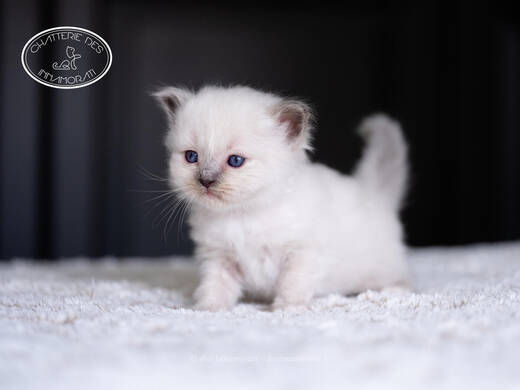
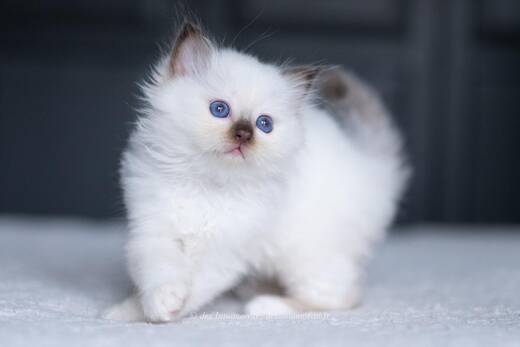
Chocolate point
Milk chocolate points on an ivory body.Photo: Un Tantinet Coquin Aka Coquinou Aka Urso des Innamorati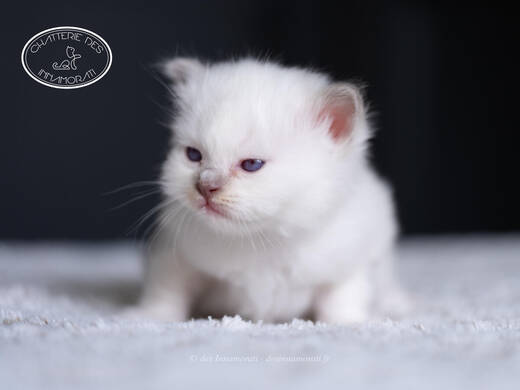
Lilac point
Pinkish gray points on an almost white body. The palest of all colors.Photo: Bernard des InnamoratiRed point
Orange-red points on a warm white body.Photo coming soonCream point
Apricot cream points, very luminous.Photo coming soonTabby
The points are striped, with the characteristic “M” on the forehead.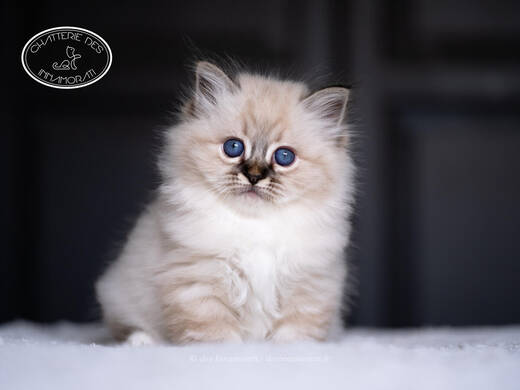
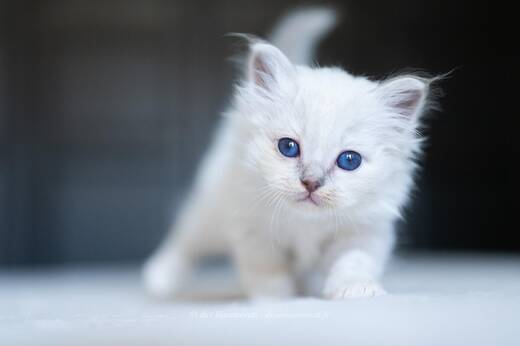
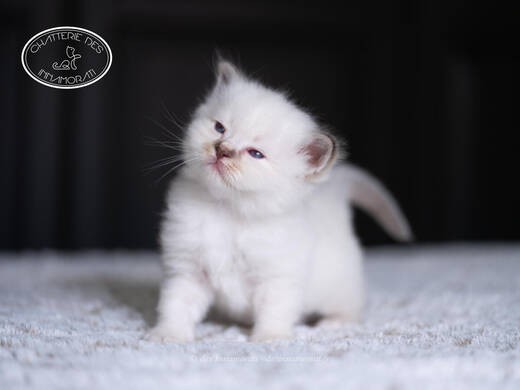
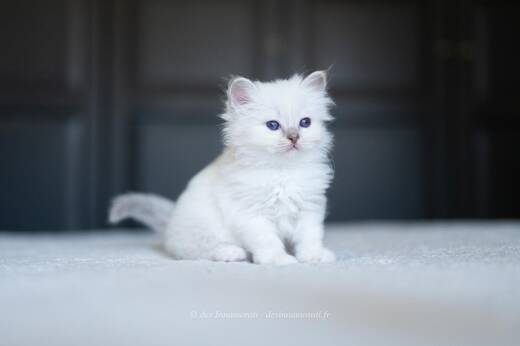
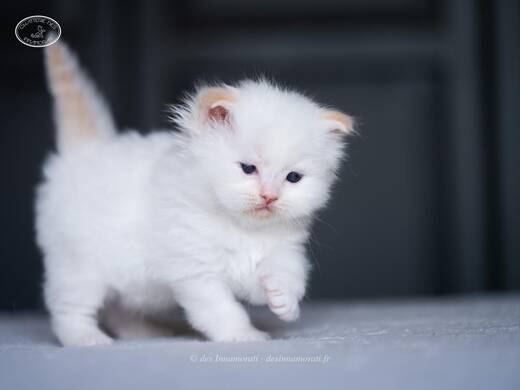
Cream tabby point
Cream stripes, very soft.Photo coming soonTortie
The points mix two colors, like tortoiseshell. Females only.Seal tortie point
Seal mottled with red.Photo coming soon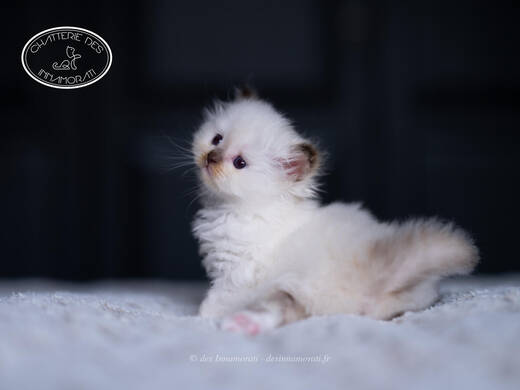
Seal tortie tabby point
Tabby and tortie at once, on a seal base.Photo coming soon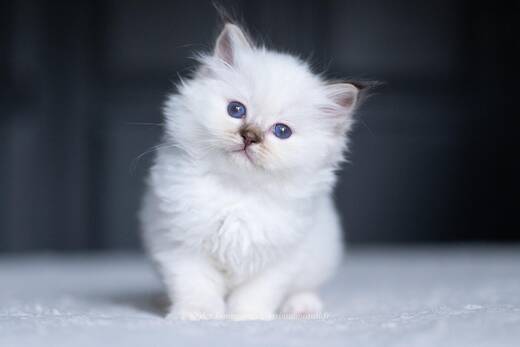
Chocolate tortie tabby point
Tabby and tortie at once, on a chocolate base.Photo: Un Chouïa Craquante Aka Cracotte des InnamoratiSilver and smoke
Recognized by FIFe in 2016, after LOOF and TICA. Our friend Cathy Viltange is one of the breeders who brought silver to the Birman.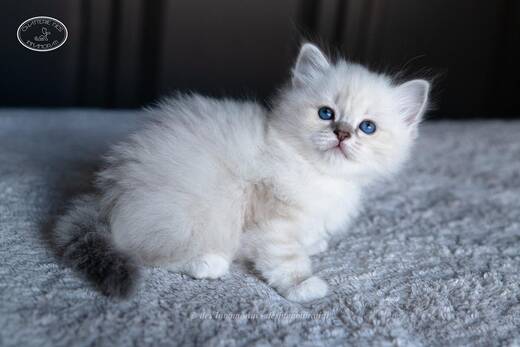
Blue silver tabby point
Blue-gray stripes on a silver background.Photo: Paradise Silver Moon des Innamorati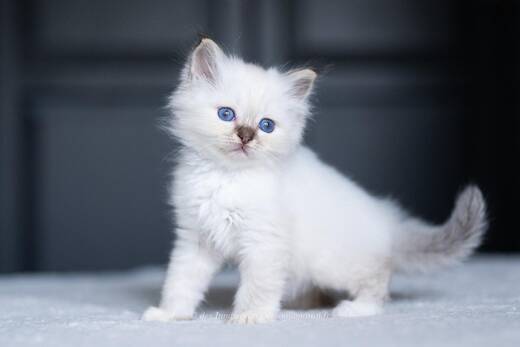
Chocolate silver tabby point
Chocolate stripes on a silver background.Photo: Un Peu Trop Charmant Aka Charmant des Innamorati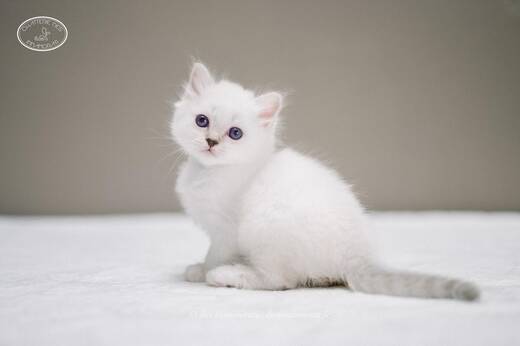
Lilac silver tabby point
Pinkish gray stripes on a silver background.Photo: Rock'n'Roll des Innamorati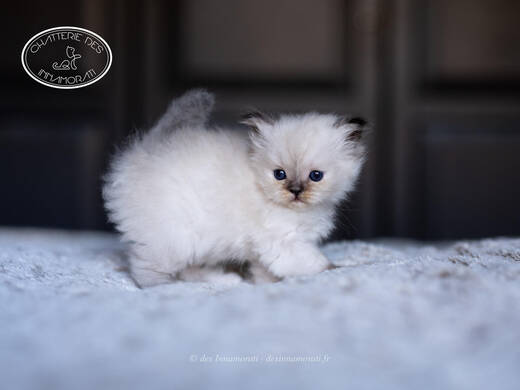
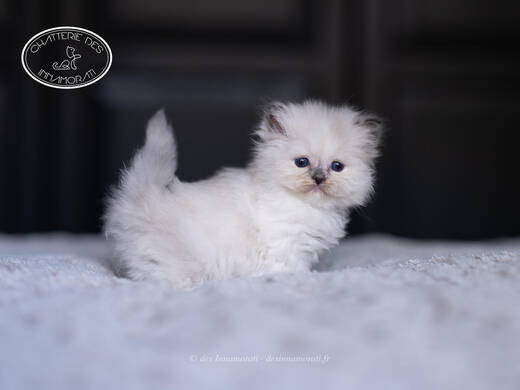
Colors without a photo have not yet been born in our cattery. We will soon illustrate them with a photo from a fellow breeder, with their permission. Sources: Fédération Féline Française and Club Français du Sacré de Birmanie (CFSBI).
Frequently asked questions
Birman cat colors: your questions
How many colors does the Birman cat come in?
Since FIFe recognized silver tabby and smoke on May 27, 2016, the Birman has 40 colors. All are colorpoint: solid, tabby, tortie, silver and smoke, on seal, blue, chocolate, lilac, red and cream bases. All keep the blue eyes and white gloves.
What is the most common Birman color?
Seal point, very dark brown points on a pale body, is the Birman’s original and best-known color. Blue point and the tabbies are also very common.
How can you tell a Birman kitten’s color?
Kittens are born almost white. Their points start to color within a few days and become clearer over the first weeks. The breeder works out the color from the parents’ colors, then records it on the LOOF pedigree. In smokes, the color can be confusing at first and only becomes clear at around 4 to 6 months.
Can a male Birman be tortie?
Very rarely. The tortie color needs two X chromosomes, which only females have. A tortie male carries a genetic anomaly and is almost always sterile.
Does a Birman’s color change with age?
Yes. A Birman’s coat darkens over the years, especially in seals, and the points grow more intense. The coolest parts of the body can also darken in winter.
What is a silver or smoke Birman?
A Birman that carries the dominant silver gene. A silver tabby has stripes on a silver background. A smoke has white at the base of its colored hairs, lots of white hair in the ears and sometimes faint tabby markings on the mask. These colors come from Chinchilla Persians and were then selected over about ten generations.